← Back to Question Types
🎲
Puzzle & Strategy
Number Grid Puzzle
Group adjacent numbers into equal-sum partitions across expanding grid sizes.
Number Grid
Step 1 of 4Every number on the board belongs to one group, and the groups fit together to cover the whole grid with nothing left over. Each group adds up to the same target, which is shown at the top of the screen while you play.
This grid is cut into groups of three, and every one of them makes 15.
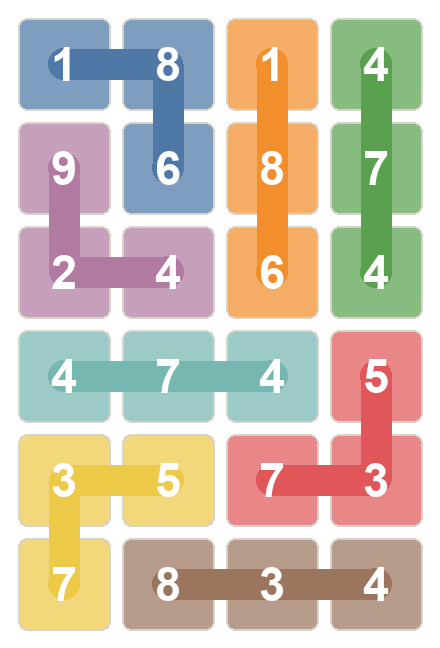
Trace a group by putting your finger on one of its squares and dragging through the rest. The order does not matter here — only which squares you cover.
Bigger groups, bigger grids
Step 2 of 4Finish a grid and the next one is harder: the grid grows, and after a while each group covers four squares instead of three. Groups of four make 20.
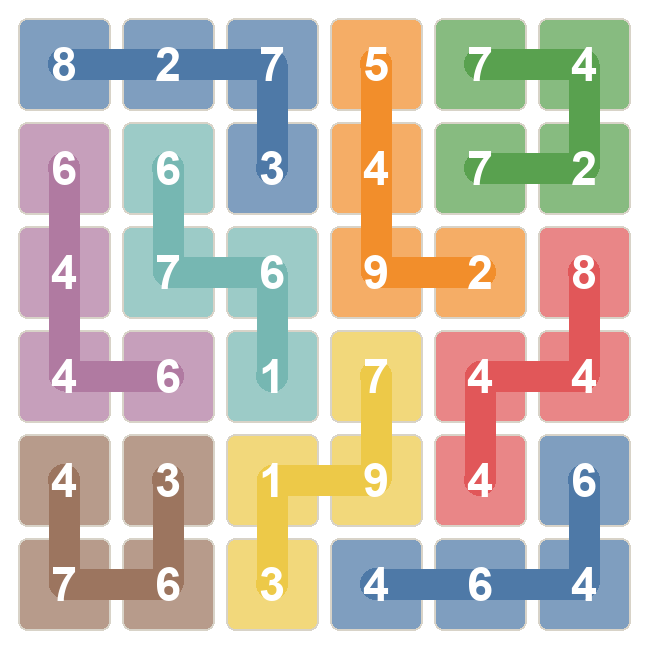
The digits are always 1 to 9, and the target is always five per square, so the rule never changes under you.
What counts as a group
Step 3 of 4Move up, down, left or right — never diagonally — and never cross the same square twice. All three drags below add up to 15, but the middle one steps diagonally, so it is not accepted.
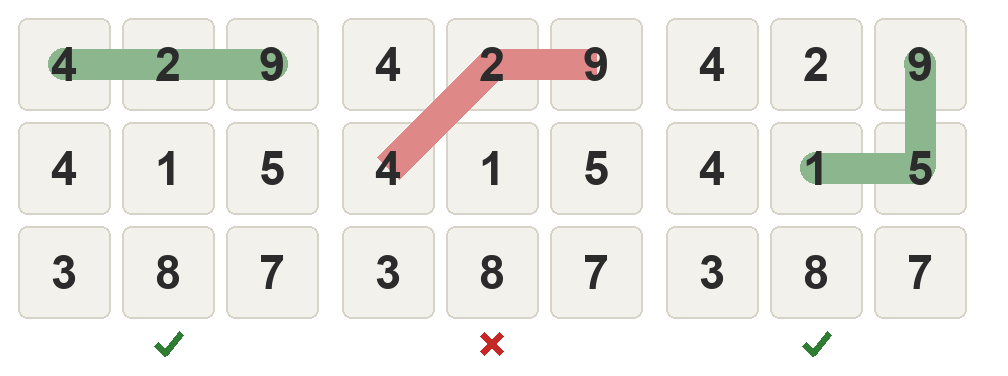
You do not have to find the groups the grid was built from. Any groups that cover the grid completely are a correct solution.
Made a mistake? Drag your finger back across a group you have laid down and it comes off. Two of its squares have to be crossed, so a stray tap cannot undo your work.
A square that no remaining group can reach turns grey. It is a warning that the rest of the grid can no longer be completed, so something already placed has to come off.
Scoring
Step 4 of 4You have four minutes for the whole session, however many grids you get through. Every group left on the board scores, and bigger groups on bigger grids are worth more.
Covering a grid completely adds a bonus worth a third of the whole grid, and moves you up to the next grid. When the time runs out, whatever you have found still counts.
Taking a group off gives its points back, so there is nothing to gain by laying the same group down again and again.
If a grid cannot be finished, "I give up" deals another one of the same size. The groups you already found stay on your score, but there is no bonus and the grids stop growing until you finish one.
After the clock stops you can see every combination of digits that made the target on the last grid.